

 Tiếng Việt
Many adults wonder whether supplements can help them grow taller. Whether you’re in your early twenties or well into adulthood, you’ve probably come across products that claim to dramatically increase height in just a few weeks or months.
But do height growth supplements actually work?
The answer depends on your expectations and your understanding of how height growth works. While no supplement can magically make adults several inches taller after growth plates have closed, the right nutritional support can play an important role in maintaining strong bones, supporting skeletal health, and helping your body function at its best.
In this guide, we’ll explore the best supplements for height growth in adults, the nutrients that matter most, and how to choose a product that supports long-term bone health.
Can Adults Grow Taller With Supplements?
Before discussing supplements, it’s important to understand a basic scientific fact.
Human height increases through the growth of long bones during childhood and adolescence. This process occurs in specialized areas known as growth plates.
Once growth plates fuse, bones can no longer naturally lengthen.
For most adults:
- Women complete growth between ages 16 and 18.
- Men generally stop growing between ages 18 and 21.
This means supplements cannot reopen growth plates or create dramatic skeletal growth.

However, supplements may help adults:
- Support bone health
- Improve calcium intake
- Maintain bone density
- Support posture and mobility
- Prevent nutrient deficiencies
The goal should be supporting a healthy skeletal system rather than expecting unrealistic height increases.
Why Bone Health Still Matters After Growth Stops
Many people assume bone health only matters during childhood.
In reality, your bones are living tissues that constantly undergo remodeling throughout life.
As you age, maintaining strong bones becomes increasingly important.
Healthy bones contribute to:
- Better mobility
- Reduced fracture risk
- Improved posture
- Greater physical independence
- Long-term quality of life
Proper nutrition is one of the most effective ways to support skeletal health.
Xem thêm: Height Growth After Puberty: Myth vs Reality
The Most Important Nutrients for Bone Health
1. Calcium
Calcium is the primary mineral found in bones and teeth.
Approximately 99% of the body’s calcium is stored in the skeletal system.
Benefits include:
- Supporting bone structure
- Maintaining bone density
- Supporting muscle function
- Assisting nerve signaling
Adults who fail to consume enough calcium may be at greater risk of weakened bones over time.
Good Sources of Calcium
- Milk
- Yogurt
- Cheese
- Sardines
- Fortified foods
- Calcium supplements
For individuals with inadequate dietary intake, supplementation may be beneficial.
2. Vitamin D3
Vitamin D3 is often called the “sunshine vitamin.”
Its primary role is helping the body absorb calcium efficiently.
Without adequate vitamin D, even high calcium intake may not be fully utilized.
Benefits include:
- Improved calcium absorption
- Bone mineralization support
- Muscle function support
- Immune system support
Many adults have insufficient vitamin D levels, especially those who spend limited time outdoors.
3. Vitamin K2
Vitamin K2 has gained increasing attention in recent years.
This nutrient helps activate proteins responsible for directing calcium into bones and teeth.
Benefits include:
- Supporting bone mineralization
- Enhancing calcium utilization
- Supporting cardiovascular health
Vitamin K2 works particularly well when combined with calcium and vitamin D3.
4. Magnesium
Magnesium plays a role in hundreds of biochemical reactions throughout the body.
It contributes to:
- Bone formation
- Muscle relaxation
- Energy production
- Nervous system function
Research suggests magnesium is important for maintaining healthy bone structure.
5. Zinc
Zinc is an essential trace mineral involved in:
- Cell growth
- Tissue repair
- Immune function
- Bone metabolism
Adequate zinc intake supports overall physical health and development.
6. Protein
Although not always considered a supplement nutrient, protein is essential for:
- Muscle maintenance
- Tissue repair
- Bone matrix formation
Bone is not made solely of minerals. Protein provides the structural framework that supports bone strength.
Adults should ensure adequate daily protein intake as part of a balanced nutrition plan.
What Makes a Good Height Support Supplement?
The best products focus on supporting bone health rather than making unrealistic promises.
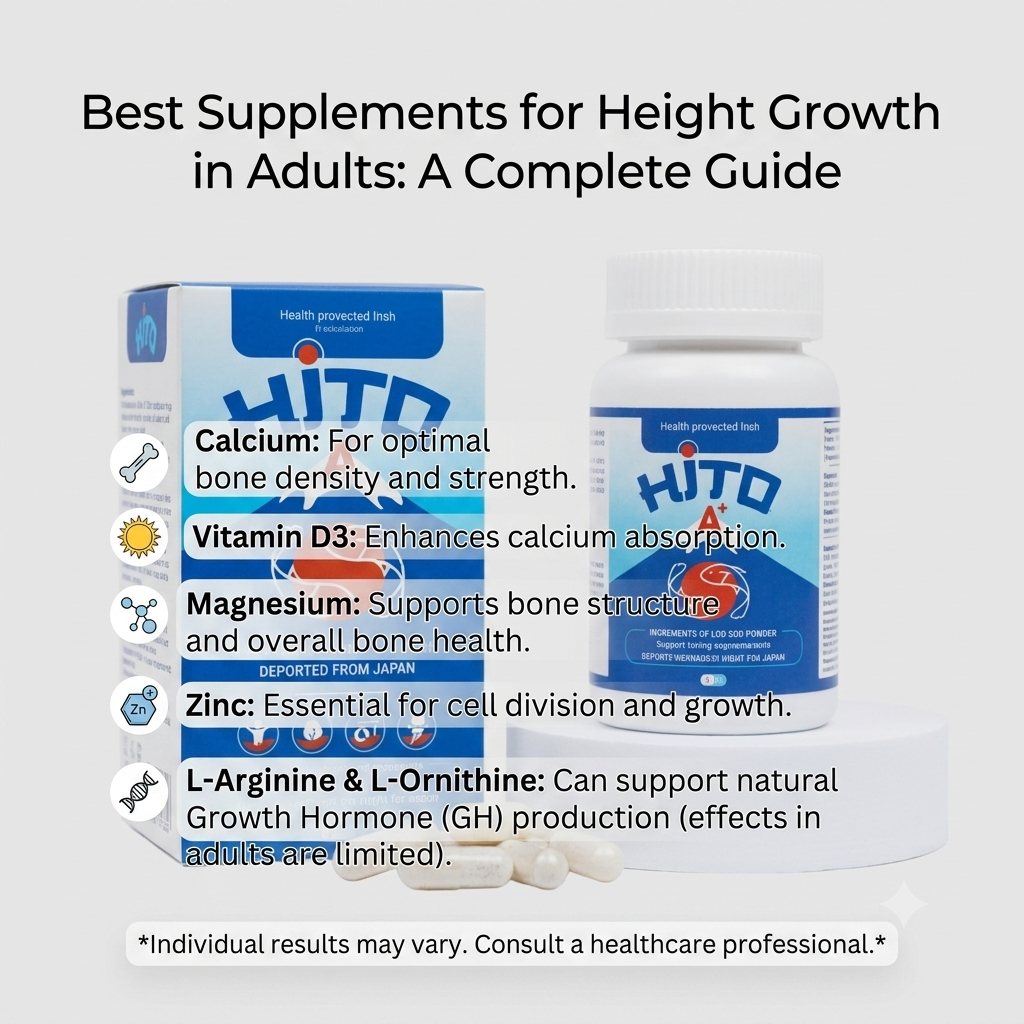
When evaluating supplements, look for formulas that contain:
Calcium
A well-absorbed form of calcium should be a primary ingredient.
Vitamin D3
Helps maximize calcium absorption.
Vitamin K2
Supports proper calcium distribution within the body.
Magnesium
Provides additional support for bone and muscle health.
Zinc
Supports overall metabolism and skeletal maintenance.
A comprehensive formula often provides better nutritional support than a product containing calcium alone.
Ingredients to Be Cautious About
Some products make exaggerated claims without scientific support.
Be cautious of supplements that promise:
- 5–10 inches of height growth
- Guaranteed adult height increases
- Immediate results
- Growth plate reopening
These claims are generally not supported by credible scientific evidence.
Quality supplements should focus on nutritional support and realistic health benefits.
Who May Benefit From Bone Support Supplements?
Certain individuals may benefit from additional nutritional support.
Examples include:
Adults With Low Calcium Intake
People who consume little dairy or calcium-rich foods may struggle to meet daily requirements.
Individuals With Limited Sun Exposure
Vitamin D deficiency is common among people who spend most of their time indoors.
Active Adults
Athletes and physically active individuals place greater demands on their bones and muscles.
Adults Concerned About Long-Term Bone Health
Maintaining strong bones becomes increasingly important with age.
Read more:How to Grow Taller at 25: What Really Works and What Doesn’t
Lifestyle Habits That Support Bone Health
Supplements work best when combined with healthy habits.
Exercise Regularly
Weight-bearing exercises help maintain bone density.
Examples include:
- Walking
- Running
- Strength training
- Hiking
Get Enough Sleep
Quality sleep supports recovery and overall wellness.
Eat a Nutrient-Dense Diet
Focus on:
- Fruits
- Vegetables
- Lean proteins
- Whole grains
- Calcium-rich foods
Avoid Smoking
Smoking negatively affects bone health and healing.
Limit Excessive Alcohol Consumption
Heavy alcohol intake may weaken bone structure over time.
Common Questions About Height Supplements
Can Supplements Make Adults Taller?
Supplements cannot significantly lengthen bones after growth plates have closed.
Are Calcium Supplements Worth Taking?
For individuals with inadequate dietary intake, calcium supplements may help support bone health.
Is Vitamin D Necessary?
Yes. Vitamin D plays a critical role in calcium absorption.
Should I Take Calcium Alone?
Many experts recommend combining calcium with vitamin D3 and vitamin K2 for optimal support.
When searching for the best supplements for height growth in adults, it’s important to separate marketing claims from scientific reality.
No supplement can dramatically increase skeletal height after growth plates have closed. However, high-quality nutritional supplements can support bone health, calcium intake, and overall skeletal strength.
The most effective formulas typically contain calcium, vitamin D3, vitamin K2, magnesium, and zinc—nutrients that work together to maintain healthy bones throughout adulthood.
Instead of focusing solely on growing taller, focus on building a strong foundation for lifelong health. Strong bones, good posture, regular exercise, and proper nutrition are the real keys to maximizing your physical potential and overall well-being.
