

 Tiếng Việt
When people think about becoming taller, they usually focus on growth, genetics, calcium supplements, or exercise. However, there is another factor that can significantly affect how tall you appear: posture.
Two people with exactly the same skeletal height can look noticeably different simply because one stands upright while the other tends to slouch.
For adults who have finished growing, improving posture is one of the most realistic ways to make the most of their natural height. While better posture cannot lengthen your bones, it can help you stand straighter, move more confidently, and create a taller appearance.
At the same time, maintaining healthy bones, muscles, and joints provides an important foundation for good posture.
What Is Good Posture?
Good posture means positioning your body in a way that allows your muscles, joints, and spine to work efficiently.
When standing, a healthy posture generally involves keeping the head balanced over the shoulders, the shoulders relaxed, and the spine in a natural position.
Good posture doesn’t mean forcing your shoulders backward or keeping your body completely rigid.
Instead, it should feel natural and comfortable.
Your posture also changes throughout the day. Sitting, walking, exercising, working, and sleeping all place different demands on the body.
Why Does Poor Posture Make You Look Shorter?
Imagine two people who are both 170 cm tall.
One stands upright with the head balanced over the shoulders and the chest naturally open.
The other has rounded shoulders, a forward head position, and a habit of slouching.
Their actual skeletal height is the same, but the second person may appear shorter because their body is not using its full upright position.
This is why posture can have a noticeable visual effect even though it doesn’t change bone length.
Can Improving Posture Increase Your Actual Height?
No.
Improving posture does not lengthen the long bones or reopen growth plates.
Instead, it allows you to stand closer to your natural full height.
For adults whose growth plates have closed, this distinction is important.
Exercises that improve posture may help you appear taller, but they should not be described as permanently increasing skeletal height.
Read more: Can You Grow Taller Naturally as an Adult? What Science Says
The Spine and Your Overall Height
The spine plays an important role in your overall standing height.
It consists of a series of vertebrae separated by structures called intervertebral discs.
These discs provide cushioning and help the spine move.
Throughout the day, the spine experiences compression from standing, walking, sitting, and other activities.
This is one reason people can measure slightly taller in the morning than later in the day.
The difference is temporary and normal.
It does not represent actual bone growth.
Why Do You Seem Slightly Taller in the Morning?
While you sleep lying down, the pressure on the spinal discs is reduced.
The discs can rehydrate and expand slightly.
During the day, gravity and normal physical activity place more compression on the spine.
As a result, your measured height can fluctuate slightly during the day.
This phenomenon is normal and shouldn’t be confused with permanent height gain.
It also explains why stretching or hanging from a bar may sometimes make you feel “taller” temporarily.
Can Stretching Improve Posture?
Yes.
Stretching can help maintain flexibility in muscles and joints that contribute to posture.
For example, spending many hours sitting can make the hips and chest feel tight.
Gentle stretching can improve mobility and make certain upright positions more comfortable.
However, stretching should be combined with strengthening.
Flexibility alone isn’t enough to maintain good posture.
Why Core Strength Matters
The muscles around your abdomen, lower back, pelvis, and hips help stabilize your trunk.
A stronger core can make it easier to maintain a stable and upright position during everyday activities.
Exercises such as planks, bird dogs, dead bugs, and controlled bodyweight movements can help develop core strength.
You don’t need to perform hundreds of repetitions.
Consistency and proper technique are more important.
Don’t Forget Your Upper Back
Modern lifestyles often involve extended periods of computer and smartphone use.
This can encourage people to spend hours with their head forward and shoulders rounded.
Strengthening the upper-back muscles can help support better shoulder positioning.
Exercises such as resistance-band rows, seated rows, reverse fly movements, and other appropriate pulling exercises can be useful.
The objective is not to force the shoulders backward but to develop the strength and control needed for comfortable alignment.
Neck Position Also Matters
Your head weighs several kilograms, so its position can affect the muscles of the neck and upper back.
A forward head position can increase the workload on these muscles.
Try to keep your head balanced over your shoulders rather than constantly pushing it forward.
When using a computer or smartphone, raising the screen closer to eye level can help reduce the need to look downward for long periods.
How Sitting Affects Posture
Sitting itself isn’t necessarily harmful.
The bigger issue is staying in one position for too long.
If you work at a desk for several hours, try changing positions regularly.
Stand up, walk around, stretch gently, or perform a few simple mobility movements throughout the day.
A well-adjusted chair and monitor can also make it easier to maintain a comfortable position.
Exercise for Better Posture
A balanced exercise routine can address several components of posture at the same time.
Strength training develops the muscles that support the body.
Mobility exercises help maintain comfortable movement.
Walking and other forms of physical activity prevent excessive inactivity.
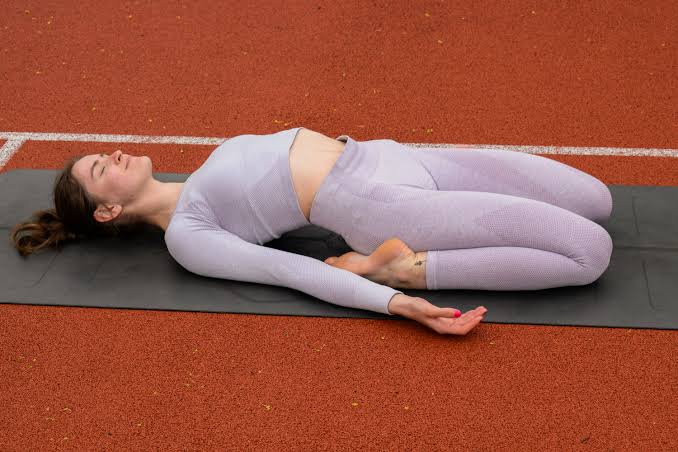
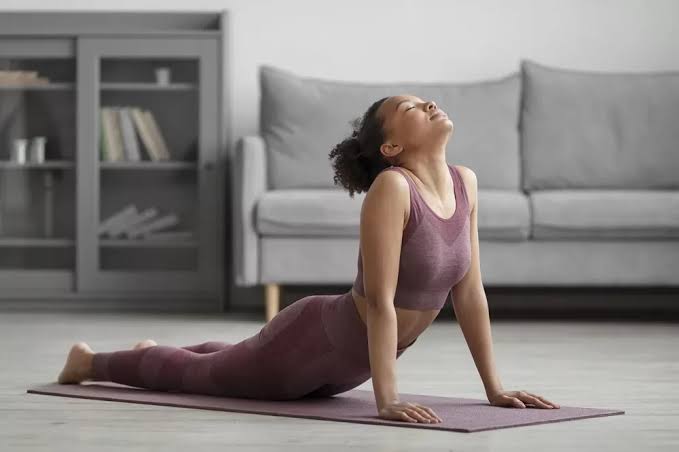
Activities such as yoga and Pilates can also improve body awareness, balance, and controlled movement.
The best routine is one you can maintain consistently.
Can Calcium Support Good Posture?
Calcium does not directly correct poor posture.
However, calcium is an essential mineral for maintaining normal bone structure.
Healthy bones provide the structural foundation on which muscles, joints, and connective tissues operate.
This makes adequate calcium intake part of a broader strategy for skeletal health.
Adults who don’t obtain enough calcium from their diet may consider an appropriate calcium supplement to help fill the nutritional gap.
The Role of Vitamin D
Vitamin D is closely connected to calcium metabolism.
It helps the body absorb calcium from the digestive system and supports normal bone health.
For this reason, many bone-health supplements combine calcium with vitamin D3.
Maintaining adequate vitamin D alongside calcium can help provide a more complete nutritional foundation for the skeleton.
However, supplementation should be appropriate to individual needs rather than based on the idea that higher doses are always better.
What About Vitamin K2?
Vitamin K is involved in normal bone metabolism and the activation of certain proteins associated with bone tissue.
Vitamin K2 is therefore commonly included in some bone-health formulas.
Calcium, vitamin D3, and vitamin K2 each have different roles.
They should be viewed as complementary nutrients rather than as a single “height-growth formula.”
Can Hito Calcium Help You Look Taller?
Hito Calcium is a nutritional supplement designed to provide additional calcium in a convenient format.
For adults, its role should be understood as supporting calcium intake and overall skeletal health.
It cannot lengthen the bones after growth plates have closed.
However, maintaining adequate calcium intake alongside exercise and good posture can contribute to a healthy physical foundation.
If your goal is to look taller, posture-focused exercise may be more relevant than expecting a calcium supplement to change your skeletal height.
Read more: Calcium, Vitamin D3, and K2: How Do They Work Together for Bone Health?
The Connection Between Strong Muscles and Good Posture
Bones provide structure, but muscles help control how the body moves and positions itself.
Weak or poorly conditioned muscles may make certain postures more difficult to maintain comfortably.
For example, stronger upper-back muscles can support shoulder positioning, while stronger core and hip muscles can contribute to trunk stability.
This is why a combination of strength, mobility, and body awareness is useful.
A Simple Posture Routine for Adults
You don’t need an elaborate program.
A few minutes of daily movement can be a useful starting point.
You might combine gentle chest stretching with resistance-band rows, planks, bird dogs, and hip mobility exercises.
Walking throughout the day can provide additional movement.
If you spend most of your working day at a desk, consider taking short movement breaks instead of remaining seated continuously for several hours.
Over time, these habits can make upright movement feel more natural.
Don’t Try to Force Perfect Posture
There is no single posture that everyone must maintain all day.
Your body is designed to move.
Trying to hold yourself rigidly upright for hours can actually create unnecessary muscle tension.
Instead, think about comfortable alignment and frequent movement.
Change positions, walk, stretch, and let your body move naturally.
Good posture is not about looking like a statue.
It’s about having the strength and mobility to move efficiently.
Posture and Confidence
Posture can influence more than physical appearance.
Standing upright with your head balanced and shoulders relaxed can make you feel more comfortable and confident.
This can influence how you present yourself when speaking, walking, working, or meeting other people.
Again, this isn’t because better posture changes your actual height.
It’s because your body language can change how you carry yourself.
What About Posture Correctors?
Posture-support devices and braces are widely available.
Some may provide temporary reminders to avoid slouching.
However, relying on an external device indefinitely isn’t necessarily the best strategy.
Developing the muscles and movement habits needed to maintain comfortable posture is generally more sustainable.
If you experience persistent pain or significant postural problems, professional assessment may be more appropriate than simply purchasing a posture device.
When Should You See a Professional?
Occasional slouching is normal.
However, persistent back pain, significant spinal curvature, weakness, numbness, or difficulty moving should not be treated simply as a posture problem.
In these situations, consult a qualified healthcare professional.
A physiotherapist or other appropriate healthcare provider can assess your movement and provide individualized recommendations when necessary.
Can posture make you look taller?
Yes, it can influence how tall you appear.
But improving posture does not increase the actual length of your bones.
For adults who have finished growing, the most realistic approach is to focus on factors you can control: strengthening the core and upper back, improving flexibility, staying physically active, maintaining a healthy body composition, and developing comfortable upright movement habits.
Nutrition also matters.
Adequate calcium, vitamin D, protein, and other essential nutrients support the bones and muscles that make good posture possible.
For adults who need additional calcium, Hito Calcium can be incorporated into a balanced daily nutrition routine.
Ultimately, being “taller” isn’t only about centimeters on a measuring tape. Standing upright, moving well, maintaining strong bones, and carrying yourself with confidence can make a meaningful difference in how you look and feel.
