

 Tiếng Việt
Exercise is one of the most important lifestyle factors for maintaining healthy bones, strong muscles, flexibility, and good posture.
For teenagers who are still growing, regular physical activity can support healthy physical development. For adults, exercise cannot make the long bones longer after the growth plates have closed, but it can help improve posture, strengthen supporting muscles, and maintain bone health.
This distinction is important. There is a big difference between growing taller and standing taller.
In this article, we’ll look at the best exercises for supporting healthy bones, improving posture, and helping you make the most of your natural height.
Why Exercise Matters for Height and Bone Health
Bones are living tissues. They continuously respond to the physical demands placed on them.
When you walk, run, jump, or perform resistance exercises, your skeleton experiences mechanical loading. This provides stimulation that helps maintain bone strength.
Exercise also strengthens the muscles surrounding your spine, hips, shoulders, and legs.
Strong muscles make it easier to maintain good posture and move efficiently.
For growing children and teenagers, regular physical activity is part of a healthy lifestyle that supports normal development. For adults, exercise becomes increasingly important for maintaining bone density, muscle mass, balance, and mobility.
Can Exercise Make You Taller?
This depends on your age and growth plate status.
If you’re still growing, regular exercise can support overall physical development and help maintain healthy bones and muscles.
However, there is no exercise that can guarantee a specific increase in height.
For adults whose growth plates have closed, exercises cannot lengthen the long bones.
Instead, certain exercises can help improve posture and spinal mobility. This may make you appear taller because you are standing more upright.
Understanding this difference helps you avoid unrealistic claims about “height-increasing exercises.”
1. Walking
Walking is one of the simplest exercises for supporting overall bone and physical health.
It places gentle weight-bearing stress on the skeleton while also engaging the muscles of the legs and core.
Regular walking can help maintain mobility and encourage an active lifestyle.
For adults who spend many hours sitting at a desk, taking regular walking breaks can also reduce prolonged inactivity.
You don’t need expensive equipment or a gym membership. A consistent daily walking routine can be a simple starting point for better physical health.
2. Running
Running provides greater impact and mechanical loading than walking.
It engages the legs, hips, and core while providing weight-bearing stimulation to the skeleton.
For healthy individuals, recreational running can be an effective component of an active lifestyle.
However, beginners should increase their running volume gradually. Good footwear, proper technique, recovery, and appropriate training volume are important for reducing the risk of overuse injuries.
Running should support your health rather than become an excessive pursuit of height.
3. Jumping Exercises
Jumping exercises create brief periods of higher mechanical loading on the bones.
Simple movements such as jumping rope, small jumps, or certain sports can be incorporated into an exercise routine.
For children and teenagers, jumping and other active games can be enjoyable ways to stay physically active.
Adults who are new to exercise should start gradually, particularly if they have joint problems or have been inactive for a long time.
Low-impact alternatives can also provide valuable physical activity.
Read more: Height Growth After 18: What Factors Really Matter?
4. Squats
Squats are excellent for developing the muscles of the legs and hips.
They engage the quadriceps, hamstrings, glutes, and core while teaching the body to control movement through the hips and knees.
Bodyweight squats are a good starting point for beginners.
As strength improves, resistance can be gradually added under appropriate supervision.
Squats do not make the legs longer, but stronger lower-body muscles can improve stability, movement, and overall physical function.
5. Lunges
Lunges are another useful lower-body exercise.
They challenge the legs and hips while requiring balance and coordination.
Forward lunges, reverse lunges, and split squats can all be adapted to different fitness levels.
For beginners, bodyweight variations are usually sufficient.
Maintaining proper form is more important than using heavy resistance.
6. Planks for Core Strength
The core muscles help stabilize the trunk and support good posture.
Planks are a simple way to train the abdominal and core muscles without requiring complicated equipment.
A basic plank involves maintaining a stable position while supporting the body with the forearms or hands and toes.
The goal is not to hold the position for as long as possible.
Good technique is more important than duration.
As your strength improves, you can gradually increase the holding time.
7. Bird Dog Exercise
The bird dog is a useful exercise for developing core stability and coordination.
Starting on your hands and knees, you extend one arm and the opposite leg while keeping the torso stable.
This movement challenges the muscles responsible for stabilizing the spine.
Because it emphasizes controlled movement rather than heavy resistance, it can be a useful addition to a posture-focused routine.
8. Resistance Band Rows
Rounded shoulders are common among people who spend many hours sitting at a desk or looking at a smartphone.
Resistance-band rows can help strengthen the upper back muscles.
Stronger upper-back muscles can make it easier to maintain a comfortable, upright posture.
The exercise should be performed with controlled movement rather than excessive force.
Avoid pulling the shoulders aggressively backward. The goal is to develop strength and control while keeping the movement comfortable.
9. Chest Stretch
Tight chest muscles may contribute to a rounded shoulder position in some people.
A gentle chest stretch can help improve flexibility around the shoulders and upper body.
Stand near a doorway, place your forearms against the frame, and gently move your body forward until you feel a comfortable stretch across the chest.
Never force the movement or stretch into pain.
Stretching is best viewed as a tool for flexibility and mobility rather than a method of permanently increasing bone length.
10. Cat-Cow Stretch
The cat-cow movement is commonly used to improve spinal mobility.
Starting on your hands and knees, gently alternate between rounding your back and extending your spine.
Move slowly and comfortably.
This exercise can be particularly useful for people who spend long periods sitting.
It may help you become more aware of spinal movement and encourage regular mobility throughout the day.
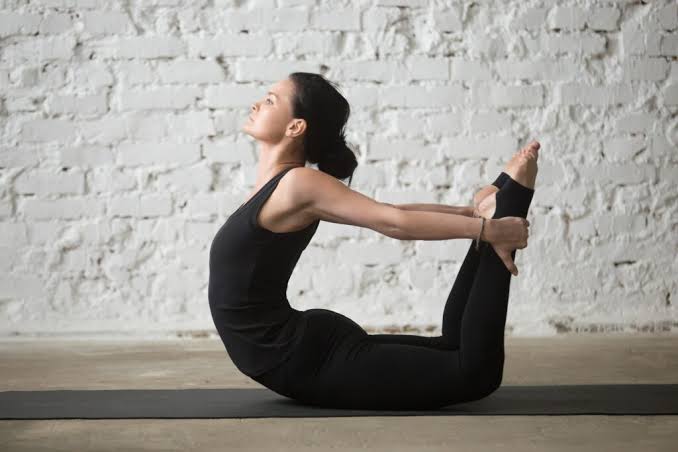
11. Yoga
Yoga combines flexibility, balance, strength, and body awareness.
Certain yoga movements can encourage better posture and improve flexibility in the hips, shoulders, and spine.
For adults, yoga can be particularly useful if their goal is to feel more mobile and stand more comfortably.
However, yoga does not lengthen adult bones.
Claims that specific yoga poses permanently increase adult height should therefore be treated with caution.
12. Swimming
Swimming is an excellent full-body activity.
It works many muscle groups and can improve cardiovascular fitness, coordination, and flexibility.
Because the body is supported by water, swimming places less impact on the joints than activities such as running.
Swimming may also encourage people to develop better body awareness and posture.
However, the feeling of being “stretched out” in the water should not be confused with permanent skeletal height growth.
13. Cycling
Cycling is another useful form of cardiovascular exercise.
It strengthens the legs and improves cardiovascular fitness while placing relatively low impact on the joints.
Although cycling isn’t a weight-bearing activity in the same way as walking or running, it can still be an important part of an overall exercise routine.
Combining cycling with resistance and weight-bearing activities can provide a more comprehensive approach to physical fitness and bone health.
Read more: How to Maximize Calcium Absorption Naturally: A Complete Guide
14. Hanging From a Bar
Hanging exercises are often promoted online as a way to become taller.
Hanging may temporarily relieve some compressive loading on the spine and provide a feeling of stretching.
It can also strengthen the grip, shoulders, and upper body.
However, hanging does not permanently lengthen adult bones.
Any short-term change in measured height would be temporary and related primarily to spinal decompression and normal daily variation.
It can be included as a mobility or strength exercise, but it should not be marketed as a guaranteed height-growth method.
Exercise and Posture: Why the Combination Matters
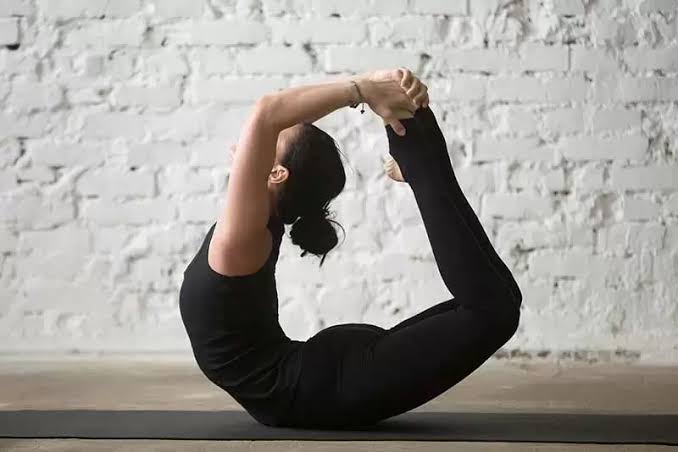
One of the biggest benefits of exercise for adults is improved posture.
A strong core, healthy upper-back muscles, flexible hips, and good body awareness can make it easier to maintain an upright position.
This can change your appearance.
Someone who previously stood with rounded shoulders may look noticeably taller after improving their posture.
Again, this does not mean that the skeleton has grown longer.
It means the person is standing closer to their natural full height.
Exercise Alone Is Not Enough
Exercise is important, but it is only one part of the picture.
Bones need nutrients such as calcium, vitamin D, protein, magnesium, and other essential nutrients.
Sleep is also important for recovery and overall health.
This is why a comprehensive lifestyle approach is more effective than focusing on a single exercise.
A healthy routine might include regular physical activity, a balanced diet, adequate calcium, sufficient vitamin D, good sleep, and appropriate supplementation when necessary.
Calcium and Exercise Work Together
Exercise places healthy mechanical demands on the skeleton, while calcium provides an essential mineral needed for bone structure.
These two factors therefore have complementary roles.
For adults, maintaining adequate calcium intake while staying physically active can support long-term skeletal health.
If dietary calcium intake is insufficient, a product such as Hito Calcium can be incorporated into a daily nutritional routine.
However, supplementation should complement exercise and a balanced diet rather than replace them.
A Simple Weekly Exercise Routine
You don’t need to spend hours at the gym to support your bones and posture.
A simple routine could include walking most days, two or three resistance-training sessions each week, and regular stretching or mobility work.
For example, a beginner might combine squats, lunges, resistance-band rows, planks, and gentle stretching.
On other days, walking, cycling, swimming, or another enjoyable activity can provide cardiovascular exercise.
The most important factor is consistency.
An exercise routine you can maintain for months and years is more valuable than an intense program that you abandon after a few weeks.
How Long Should You Exercise?
The appropriate amount depends on age, fitness level, health status, and individual goals.
Rather than focusing only on one number, aim to avoid prolonged inactivity and build regular movement into your daily routine.
Adults should generally include both aerobic activity and muscle-strengthening activities throughout the week.
Teenagers should also participate in regular physical activity appropriate for their age and abilities.
If you’re new to exercise, begin gradually and increase the intensity over time.
The Bottom Line
Exercise cannot guarantee that you will become taller, and adults cannot permanently lengthen their bones through stretching, hanging, swimming, or specific exercises once their growth plates have closed.
However, exercise can do something equally valuable: help build stronger muscles, support healthy bones, improve flexibility, and promote better posture.
For teenagers who are still growing, regular physical activity is part of a healthy lifestyle that supports normal development.
For adults, combining weight-bearing exercise, strength training, mobility work, adequate calcium, vitamin D, protein, and sufficient sleep can help maintain a strong and healthy body.
Hito Calcium can be included as part of this broader approach when additional calcium supplementation is appropriate.
The goal isn’t to search for one exercise that magically adds centimeters. Instead, focus on building a healthy body that allows you to stand tall, move well, and maintain strong bones for years to come.
